When the construction vehicles shift dirt in the fields near her property, Sue Dill says she can feel her house shake.
The fields used to be farmland.
But in February and October of last year, an anonymous company convinced local officials to rezone the land for research and manufacturing. Dill's neighbors moved out one by one. Construction crews rolled in.
Past Dill's house — past her barn, past the acres of woods where her sons used to play, past the trails she and her husband used to walk together — sat several hundred acres of farmland.
Now, many of those fields are flat and gray. The earth is churned up in mounds. Wire fences line the roads.
A data center is coming to town.
Last year, Morgan County officials approved two separate petitions to rezone land for the construction of “Project Louie,” a billion-dollar data center 45 minutes north of Bloomington.
On approximately 550 acres once occupied by farmland, houses, wetlands, streams and woodlots, Google plans to construct six buildings and a substation.
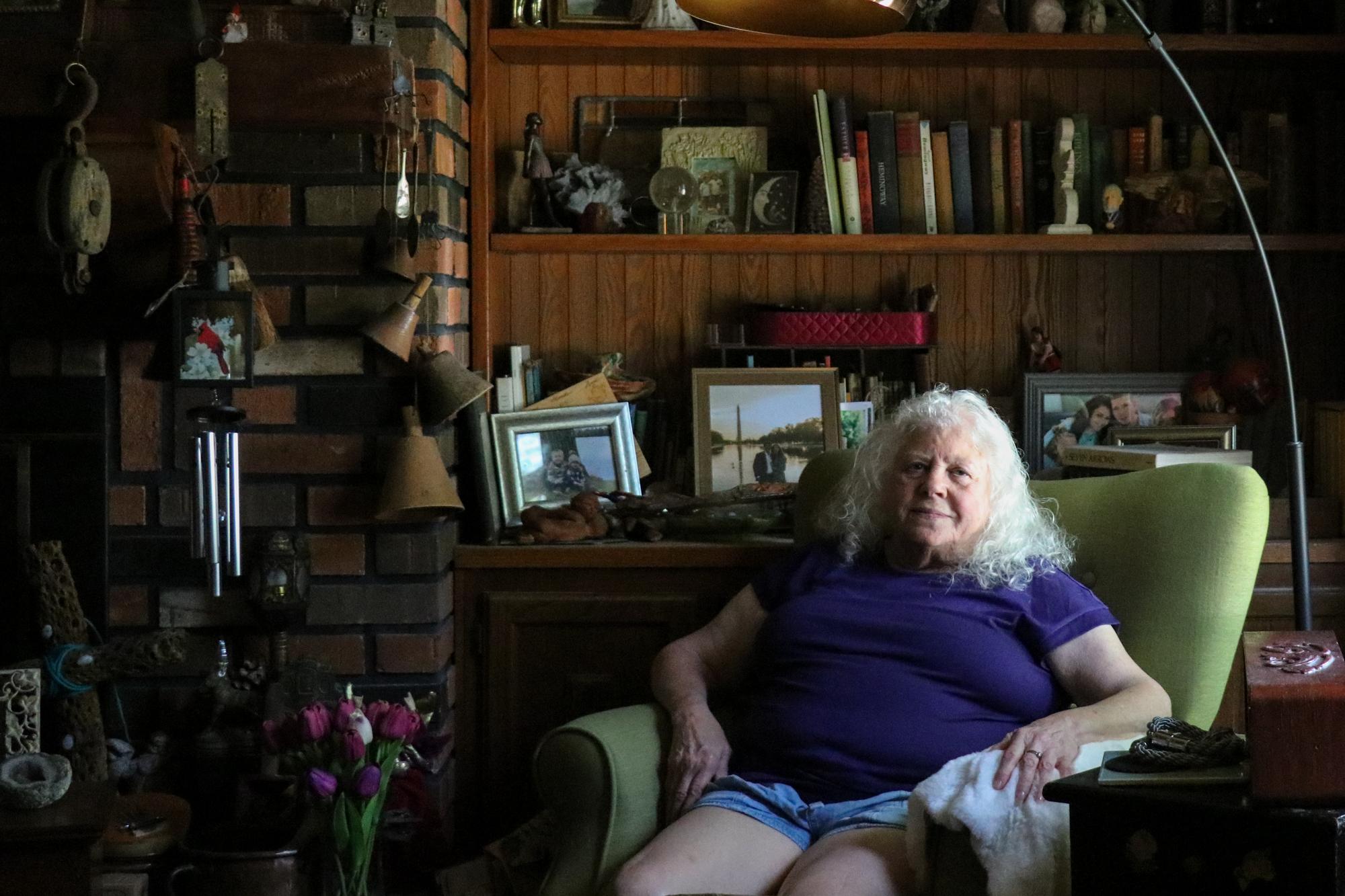
Emerson Elledge | IDS
Sue Dill poses for a portrait April 23, 2026, in her Morgan County home. The Dill family's 14 acres sit just south of Morgan County’s West Keller Hill Road, in a gap nestled right at the top of a data center campus.If it ran at 90% capacity for a full year, the Morgan County Correspondent reported, the substation planned for Project Louie could use 9.46 million megawatts of power a year — nearly double the 2024 energy use of all AES Indiana’s residential customers combined.
At max capacity, each data center building could use roughly 4 million gallons of water a day, the Morgan County Correspondent reported — equivalent to the average daily at-home water usage of over 48,000 Americans.
The developer, Google, used shell companies to keep its involvement a secret until eight months after the first rezone. Local officials, including every county commissioner, signed non-disclosure agreements committing not to share Google’s name or any information Google considered proprietary.
At county hearings, residents turned out in droves. Petitions gathered thousands of signatures and protest groups held meetings. At public meetings and online, locals accused county officials of greed, corruption and keeping secrets.
The commissioners who voted for the project said it would bring revenue that could help the county. But the scale and impact of the project meant for many residents, the character of their countryside was on the line.
"This is not gonna be a peaceful little country town anymore,” Dill said.
As demand for artificial intelligence grows, technology companies are responding with a national rush to build new and bigger data centers. Most of these data centers are planned for rural areas, and their impact is the most acute at the local level.
For local officials, those data centers often carry promises of economic growth. They also use huge amounts of energy and water, and research indicates large data centers could heat up surrounding areas by up to 16 degrees, with temperature changes reaching more than 6 miles away. In some cases, nearby residents say the centers have caused their wells to run dry, disrupted daily life with constant noise or emitted airborne pollutants harmful to human health.
In Morgan County, signs sprang up along yards, roadsides and the fields where the data center would be built. “KEEP MONROVIA RURAL,” the signs read. “NO DATA CENTER.”
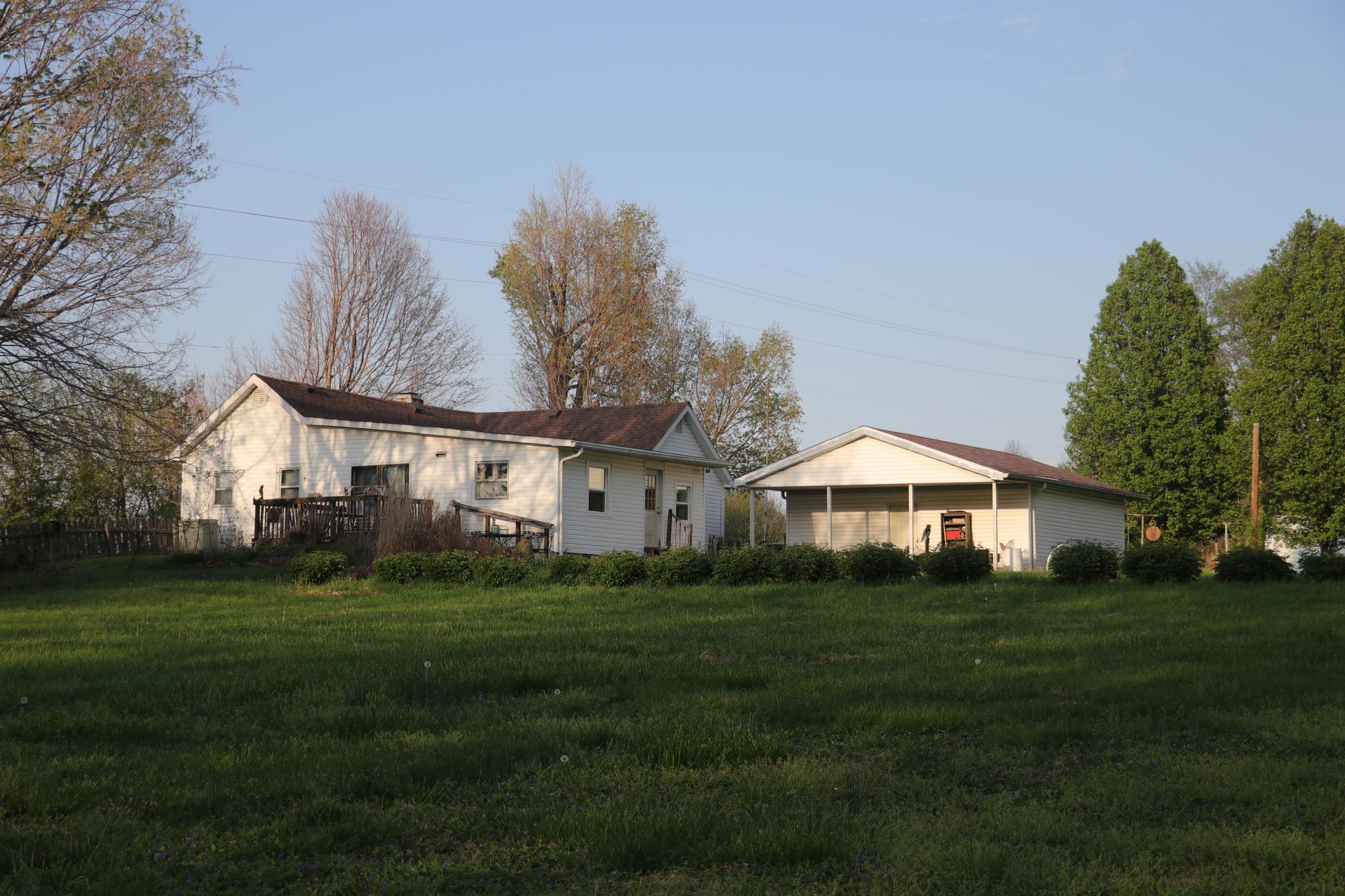
Ella Curlin | IDS
Sue Dill’s house is pictured from her backyard April 14, 2026, in Morgan County. Dill moved to her home 39 years ago from the west side of Indianapolis.Before Dill’s husband died, the two of them made the land up in a trust for their son Josh to inherit.
Much of the trust’s 14 acres are woodland. Dill's white-and-brick home sits on the grassy edge of a two-lane road, peeking over a hill toward passing cars.
They moved there 39 years ago from the west side of Indianapolis. Their new home had woods, a pasture, a barn and a well so deep that local stories said even in drought, it always had water.
Her youngest, Gabriel, was 11 or 12 when they moved in, Dill said. His brother Josh was 15. Gabriel would forage for morel mushrooms around the pasture, and her husband Ronnie built a tree stand in the woods. She and Ronnie took long walks through the tree-covered paths. They loved that land, she said.
"We just absolutely thought we'd died and gone to heaven," Dill said.
Ronnie died in that house in 2024, Dill said. Now she keeps his ashes in a wooden box in the living room. She sits out back in the evenings and sketches the treeline. A couple months ago she dreamed Ronnie walked into the woods, and as she called out to him, he was unable to hear.
The Dill family's 14 acres sit just south of Morgan County’s West Keller Hill Road, in a gap nestled right at the top of the data center campus.
By April this year, that campus was hemmed in by barbed wire.
At the start of a Morgan County Commissioners meeting in February last year, Commissioner Kenny Hale reminded attendees he would have them removed by a police deputy if they refused to be courteous.
Then he apologized.
“We can’t make everybody happy, and I’m sorry about that,” Hale said. “But we’re going to try to do the best we can.”
The commission was voting that day on whether to approve a planned unit development, or PUD, that would alter zoning rules for the area to allow developers to construct a data center on 390.74 acres along Antioch Road.
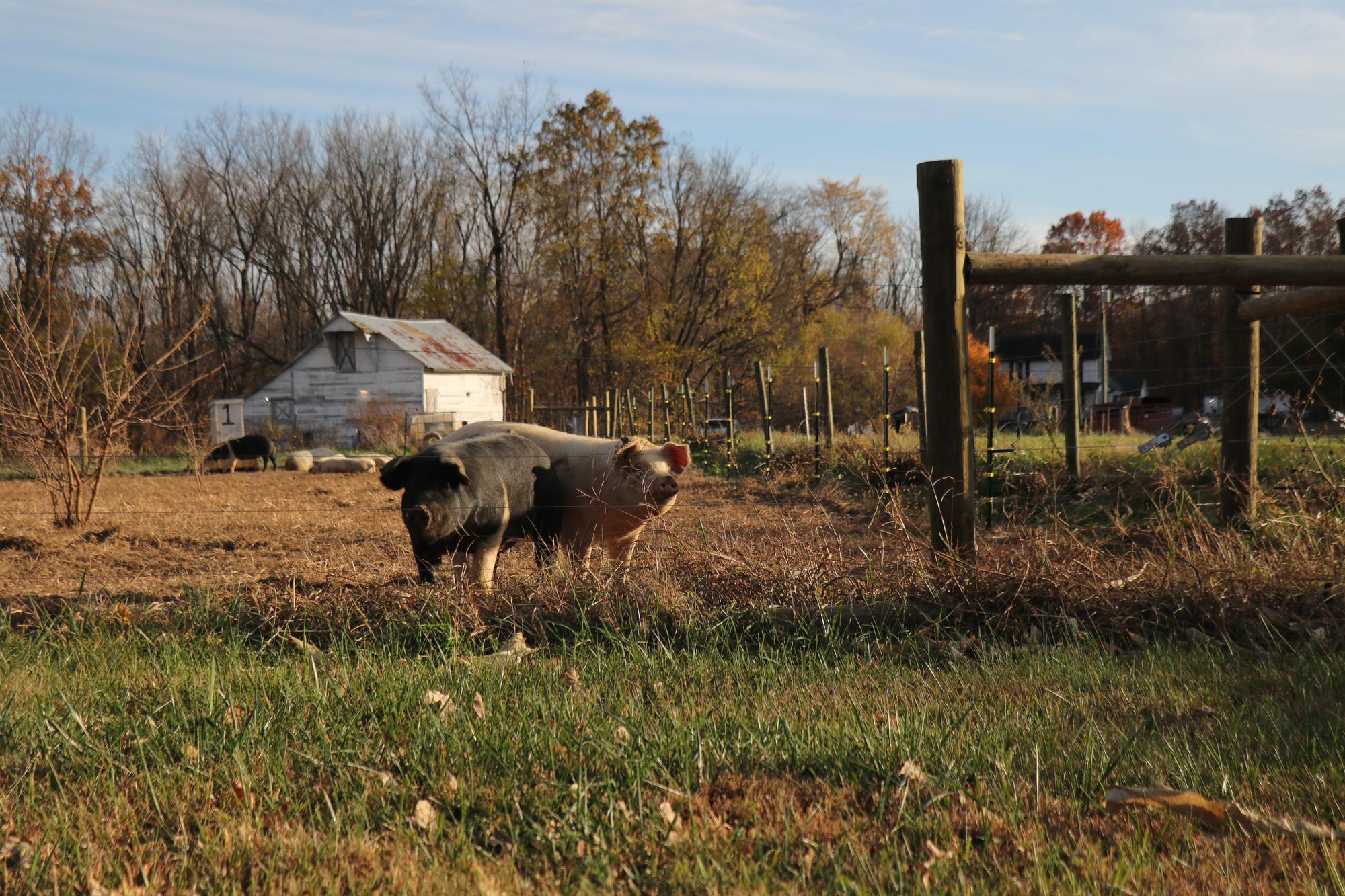
Ella Curlin | IDS
Two pigs look through the fence in a pasture on Terri Moore’s farm Nov. 18, 2025, in Morgan County. Moore first moved onto the farm 41 years ago with her late husband Terry.The rezoning would change the purpose of the land. Previously, developers had to construct buildings within restrictions, such as height limits, for agricultural or residential buildings. In the proposed requirements, Project Louie's primary buildings could be up to 75 feet tall, and up to three-quarters of the lots could be covered with hard surfaces. They can emit a maximum of 65 decibels at the property line — the equivalent of a business office.
Thirteen people spoke to the commissioners in opposition to the plan. They worried about the lights, the water, the energy use, the construction, the noise. Two were concerned the development would disturb eagles. Several others questioned who stood to benefit from the tax revenue.
Many brought up concerns about transparency.
Economic Development Corporation Executive Director Mike Dellinger later told the Morgan County Correspondent he’d been approached about the project in the first quarter of 2024. Google had operated through a series of limited liability companies, primarily a shell company first made in Delaware named Woodland Caribou LLC.
The manager listed on the registration statement for the Indiana branch of Woodland Caribou LLC, Michael Montfort, shares an address with major technology law firm Wilson Sonsini, where a senior counsel with the same name works in employee benefits and compensation. Montfort is also linked to data center projects in northern Virginia, Little Rock and Conway in Arkansas and withdrawn projects in St. Charles, Missouri and Franklin Township, Indiana.
By the end of August 2024, landowners had started signing agreements with Woodland Caribou LLC. Local leaders, including every member of the county commission, signed NDAs with other shell companies in October and December 2024.
Public notice went up in the Correspondent on Jan. 23, 2025.
"We have no time to even think about it,” Sean Walker, who lives across from Project Louie’s campus, said during public comment. “You guys will make decisions that's going to last forever. My kids will be out of high school by the time this is done being built."
Forty minutes later, the commissioners voted 3-0 to approve the rezone.
The audience broke into uproar. Several people began shouting. Some yelled curses.
“How much are they paying you?” one person called up to the commissioners, repeatedly. “How much are they paying you?”
In March 2025, Terri Moore and another property owner, both of whom own land near the data center, filed a lawsuit requesting review of the decision to approve the rezone for the first 390.74 acres of Project Louie.
Their lawsuit points out that Google’s name was concealed from the public and withheld from officials who didn’t sign an NDA. The lawsuit also alleges the construction will harm the enjoyment and value of the plaintiffs’ properties while worsening Morgan County’s “rural character.”
Moore first moved into Morgan County 41 years ago with her late husband Terry. The farm was his idea, she said. He grew up spending summers at his uncle’s house in the Illinois countryside, and his dream was to own five acres and a pond.
“This was his life dream,” Moore said. “Then it became mine.”
On their farm, they grew a strawberry patch, an orchard with apple and peach trees and English walnut trees along the driveway. For livestock, she and Terry started small with chickens, then an Angus black cow. They got their first pigs when Moore stopped another farmer from killing the runts of a litter. They raised alpacas, too, until Terry became too sick to take care of them.
In a display cabinet in the living room, a small box shows a man sitting astride a horse before an orange sunset. Terry’s ashes sit inside. After he died, Moore thought about planting a tree on the property and having both of their ashes buried underneath.
Nowadays, she said, she doesn't know what she’ll do. For a long time, the thought of a big industrial building by the place she’d made her life with Terry made her depressed and sick with grief.
Moore’s white farmhouse sits at the end of a gravel driveway, past a pond and a barn her nephew is renovating. The view from her porch where she sits to watch the sunset shows the pigsties full of grunting hogs, the pasture where she raised alpacas and the long stretch of asphalt that is State Road 42.
Across that road sits Project Louie.
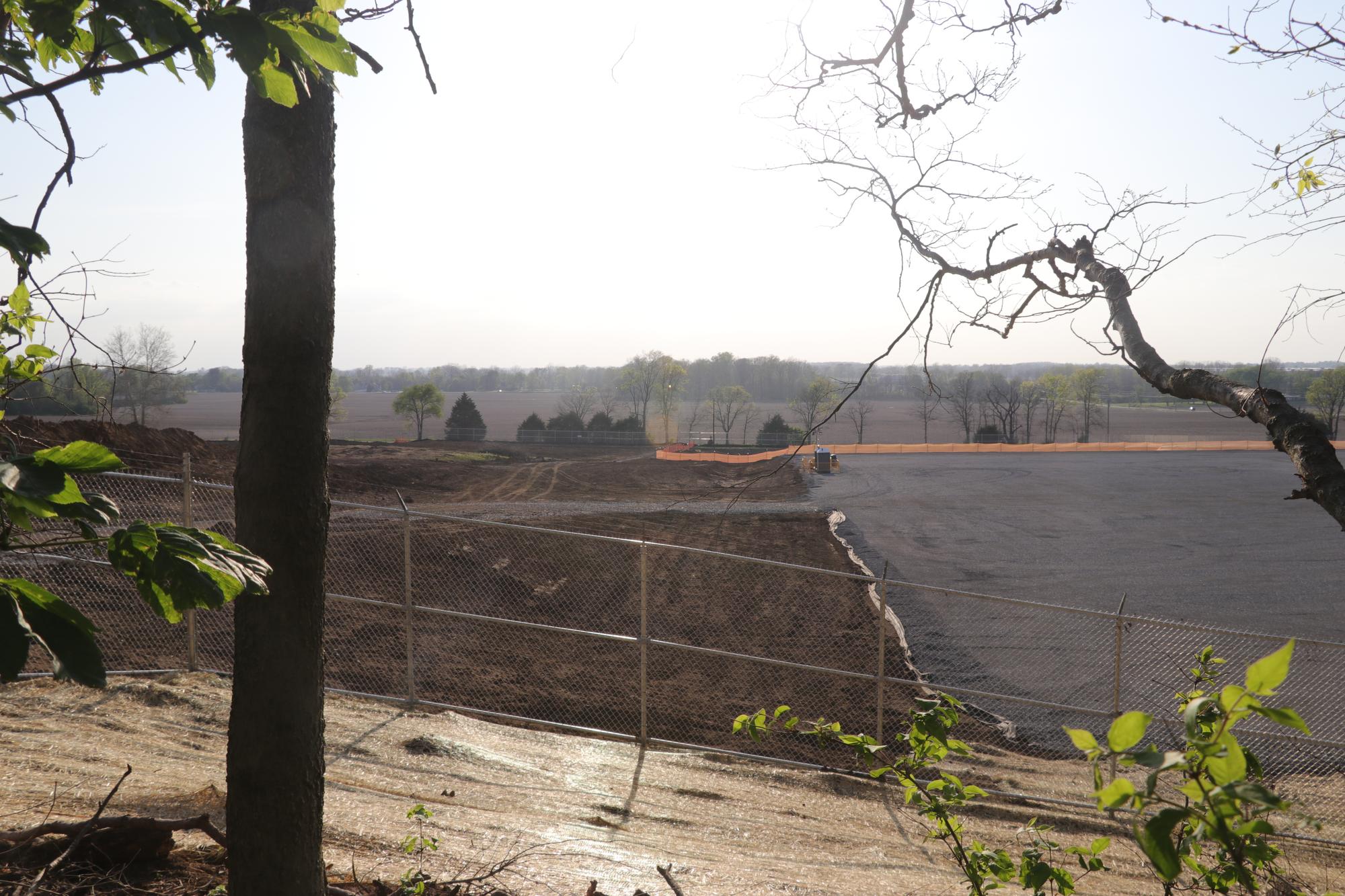
Ella Curlin | IDS
A section of Project Louie is seen from Sue Dill’s west property line April 14, 2026, in Morgan County. The county commission approved two rezones for the project in 2025.In October 2025, the Morgan County Commissioners approved a second rezoning request that expanded the Project Louie campus by 158 acres, bringing the total land to approximately 550 acres.
Dill, along with several other people who owned property near the site, filed a lawsuit. In January this year, that was consolidated with the lawsuit including Terri Moore. The litigation is ongoing.
In 2025, as data center growth accelerated across Indiana, Hoosiers saw a 17% increase in the average energy bill — the highest year-over-year increase since 2005, IndyStar reported.
Utility companies have said the price of improved infrastructure and power generation isn’t passed to customers. Consumer advocacy groups like the Citizens Action Coalition have called that into question.
The Morgan County Economic Development Corporation says Google will pay for Project Louie’s electricity and infrastructure costs. AES Indiana, which has predicted powering the project will cost $737.3 million, has said the same.
Meanwhile, Dill said she can’t afford her power bills.
Her average bill used to land around $150, she said. But recently, those costs have jumped. In December, she was due for $176.67. In January, that rose to $423.26, then $462.35 in March, then $261.59 due this April.
When Ronnie had cancer, she said, she used to run the furnace and all the heaters in the house to keep him warm. Even then, she said, her bills never reached $200.
Dill said she’s between a rock and a hard place. She plans to live at her house on Keller Hill until she dies there, but she can’t afford to stay in her house if she has to pay $400 bills each month.
“I don't know, I don't know what to do,” Dill said. “I guess I got to write a check again and send it to them because I can't have my power go out.”
Morgan County officials have said they see the project’s potential to boost the community and bring economic growth.
In October 2025, Dellinger of the Economic Development Corporation told the Morgan County Correspondent the income from the project would bring the area “stability.” That same month, the county commission passed a resolution supporting data center development.
“Data centers provide high-paying jobs, increase local tax revenues, and support technological advancement across industries,” the resolution read.
Project Louie is a $1 billion investment, according to documents submitted during Terri Moore’s litigation. The company’s promised investments include 100 full-time jobs with wages of either $100,000 a year or 125% of Morgan County’s average annual wage, whichever is greater. The tax payments should meet a minimum of $500,000 per year, with no less than $300,000 per data center building.
In May 2025, the county granted Woodland Caribou LLC tax breaks of up to 50% for 10 years.
In a written statement to the Indiana Daily Student, Commissioner Don Adams said that to research Project Louie, he first called the Chamber of Commerce in Cedar Rapids, Iowa, where Google has data centers, and was told the company’s “benefit to the community was over the top.”
Adams described Google as “good neighbors,” writing the company had given local schools large sums of money while granting $200,000 to the Monrovia Future Farmers of America and $1 million to a combination of local nonprofits.
Adams, who is 83, said he voted yes on the rezone for his grandchildren.
“I am very confident their opportunity to thrive in the future Morgan County increased more than would have happened with the 580 acres of corn,” Adams wrote.
AES Indiana, Bryan Collier and Mike Dellinger did not offer comment. Kenny Hale, who has since stepped down as commissioner, directed the IDS to the other commission members.
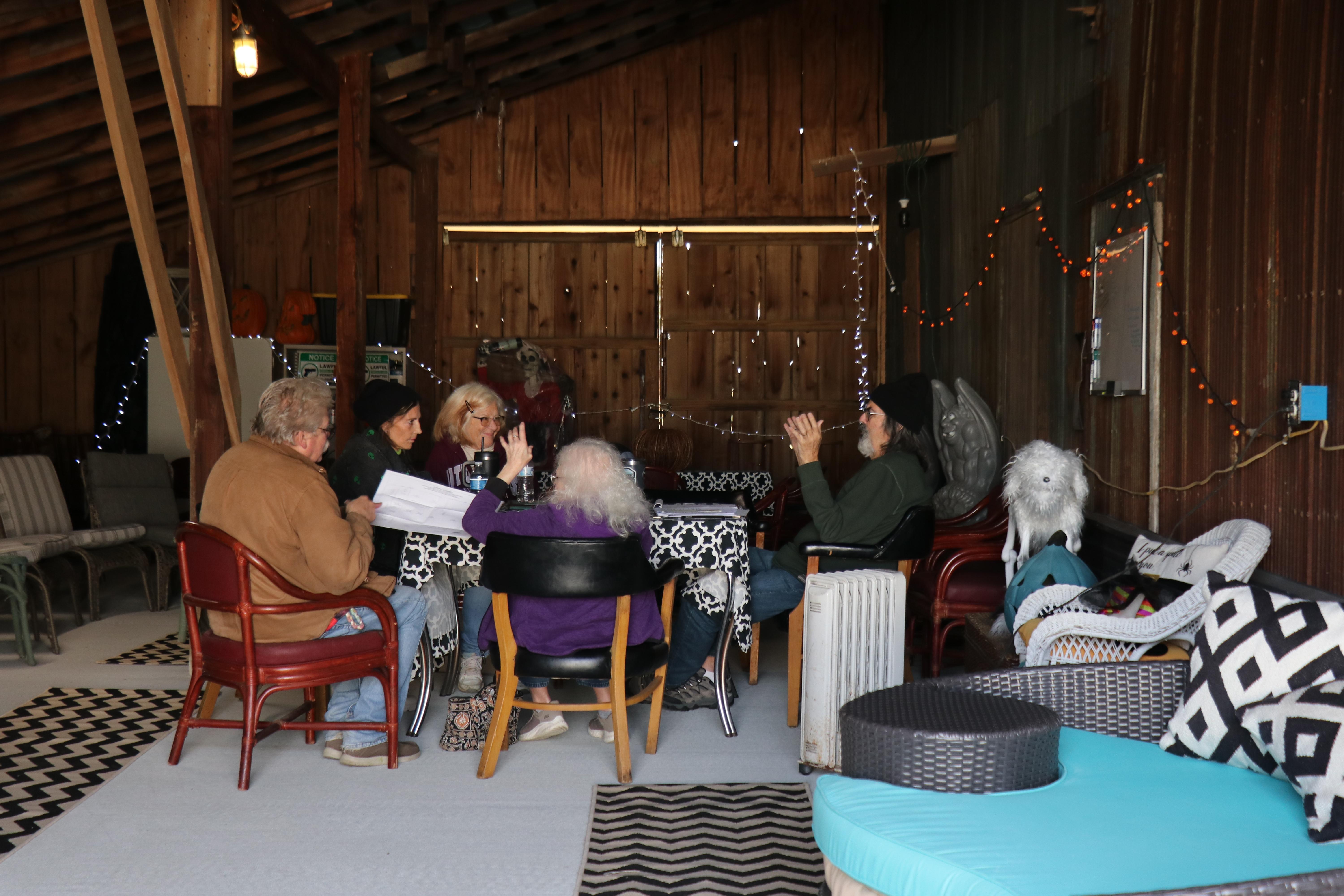
Ella Curlin | IDS
From left to right, Bill Williams, Susan Boulianne, Terri Moore, Sue Dill and Chris Green discuss Google’s planned data center in Boulianne’s barn Nov. 18, 2025, in Morgan County. Williams, Boulianne, Moore and Dill filed lawsuits last year over the data center rezonings.Google estimated constructing the initial buildings for the data center could take two years.
Wire fences line the Project Louie campus. In some stretches, the fields are flattened and gray; in others the dirt piles up in steep embankments. Construction vehicles crowd one corner of the property. Signs around the property warn: “No Trespassing.”
"Everybody gets so depressed when they drive down our road, and they see what that is,” Dill said. “Now, it's overtaken us, this small country little town."
Dill’s neighbors were bought out nearly all at once. Woodland Caribou LLC bought the lots to her west and south Sept. 10, 2025. It bought the parcel east of her 65 days later. Overall, for the sales of 15 properties between Sept. 10 and Nov. 14, 2025, Woodland Caribou LLC spent nearly $78 million.
Across the road from Moore’s farm, empty residential homes sit behind barbed wire fences, cars parked in their driveways.
Dill doesn’t know what Ronnie would do, she said. Maybe he’d move back to Indianapolis, she thinks. He was always sick of mowing the grass.
She’s made up her mind, though. She couldn’t sell the house now if she tried, she said. She’s staying, anyway.
Dill said she’s heard a lot of rumors about the data center, and she doesn’t know what to believe. Her worries, like the rumors, are piling up. She worries the data center will emit fumes that damage her trees or trigger her asthma. She worries about the electricity use. She worries about the noise from the data center’s operation.
Around the end of February, earthmovers started shifting dirt in the fields by her house, Dill said. The machines vibrate the earth to make it easier to move. When they vibrate, Dill said, her house shakes with them.
Meanwhile, trucks have been moving up and down the two-lane road beside the data center campus. They make a ruckus, Dill said, but she’s starting to learn to sleep through the noise.
“My bedroom's on the outside wall,” she said. “I hear it all. They start early.”
In the woods behind her house, purple wildflowers line the paths where she and Ronnie used to walk. Her husband's old tree stand is starting to fall apart. Planks and boards are missing from the walls, the nails exposed to air. Parts of the floorboards are starting to crumble.
Two blue plastic chairs sit at the top. One has fallen on its side. The other faces north, into the trees. Through the canopy, past the fence outlining Project Louie, churned-up dirt piles up in the fields.
Past that, trailers and excavators are crowded up in rows.
Like what you're reading?
Support independent, award-winning student journalism.
Donate.