A sprawling gray warehouse in southern Bloomington is abuzz on a Thursday night.
Students mill about and exclaim with excitement as they glimpse familiar faces. Friend groups enter en masse, scrambling for the few remaining clusters of empty seats. Attendees glance expectantly at the stage at the front of the room, gathering as close to the center of the action as they can.
A two-minute countdown appears on a screen hanging behind the stage. The room’s excited hum approaches a roar as the seconds tick down. When the clock runs out, a band emerges to claim the instruments on the stage and fill the air with an impassioned ballad.
Focus washes over the warehouse. The lights fall as students rise to their feet and sing along with the lyrics projected on the screen. They rest their Bibles on their chairs.
It’s time for church.
The Salt Company is the campus ministry of Bloomington’s Embassy Church and is part of a broader network of Salt Company ministries across the country. This echoey warehouse attached to the Embassy Church building, about 2 miles south of Sample Gates, accommodates the hundreds of students who gather for the weekly ministry-wide meeting.
Even here, though, the building is near capacity. Salt Company staffers rush to set up additional lines of folding chairs in the back for a stream of latecomers.
The soft Christian rock music seems to capture students as soon as they find their places. As the song progresses, once-mumbling lips give way to belting voices. Worshippers rock gently back and forth. Arms fly into the air, as if in surrender.
The band strikes its final chord, pauses for applause and promptly launches into more musical praise. Voices, as one, declare their faith in and dependence on an unfailing protector.
This is one of Bloomington's biggest parties.
•••
The Salt Company is one of Indiana University’s vast array of over 20 Christian organizations. For Hoosiers spanning the spectrum of Christian denominations, these groups offer an opportunity to suffuse college life with spirituality.
Students appear more eager to pursue this opportunity than ever. Campus sidewalks are regularly muraled with colorful chalk advertising upcoming ministry meetings. Telephone poles sport flyers to join Bible studies or attend worship events. IU might just be experiencing a Christian resurgence.
Hoosiers' uptick in interest in Christian community may parallel national religious trends. After a decades-long decline, the share of U.S. adults identifying as Christian has leveled off in recent years.
However, IU religious studies professor Candy Gunther Brown said that doesn’t necessarily mean young adults are flocking to religion for doctrine alone.
“People are defining Christianity for themselves in new ways,” Brown said. “There’s a lot that’s very relational and personal for young people. A lot of Christians prefer thinking of Christianity as a relationship between themselves and God, but also relationships among one another.”
For some students, engaging with Christian life on campus isn’t just about faith, but also finding a tether to their upbringings and their peers.
Recent IU graduate Hephzibah Oluwajobi was raised in Nigeria by pastor parents. With a childhood that often revolved around church life, she knew she wanted to bring her faith with her to college. She joined IU’s chapter of Chi Alpha, a Pentecostal-leaning ministry found on hundreds of campuses nationwide, as a freshman.
“I’d never experienced community in this way before: like-minded fellows, people my age, pursuing faith the same way that I was,” Oluwajobi said.
Religion similarly helped senior Liam McDonald, a lifelong Catholic and active member of IU’s St. Paul Catholic Center, connect to both his home and his new environment.
“The first day I was dropped off at college, I thought, ‘I’ll just go to a mass and see what it’s like,’” McDonald said. “From there, I’ve found such substance in my relationships with the people around me but also with God.”
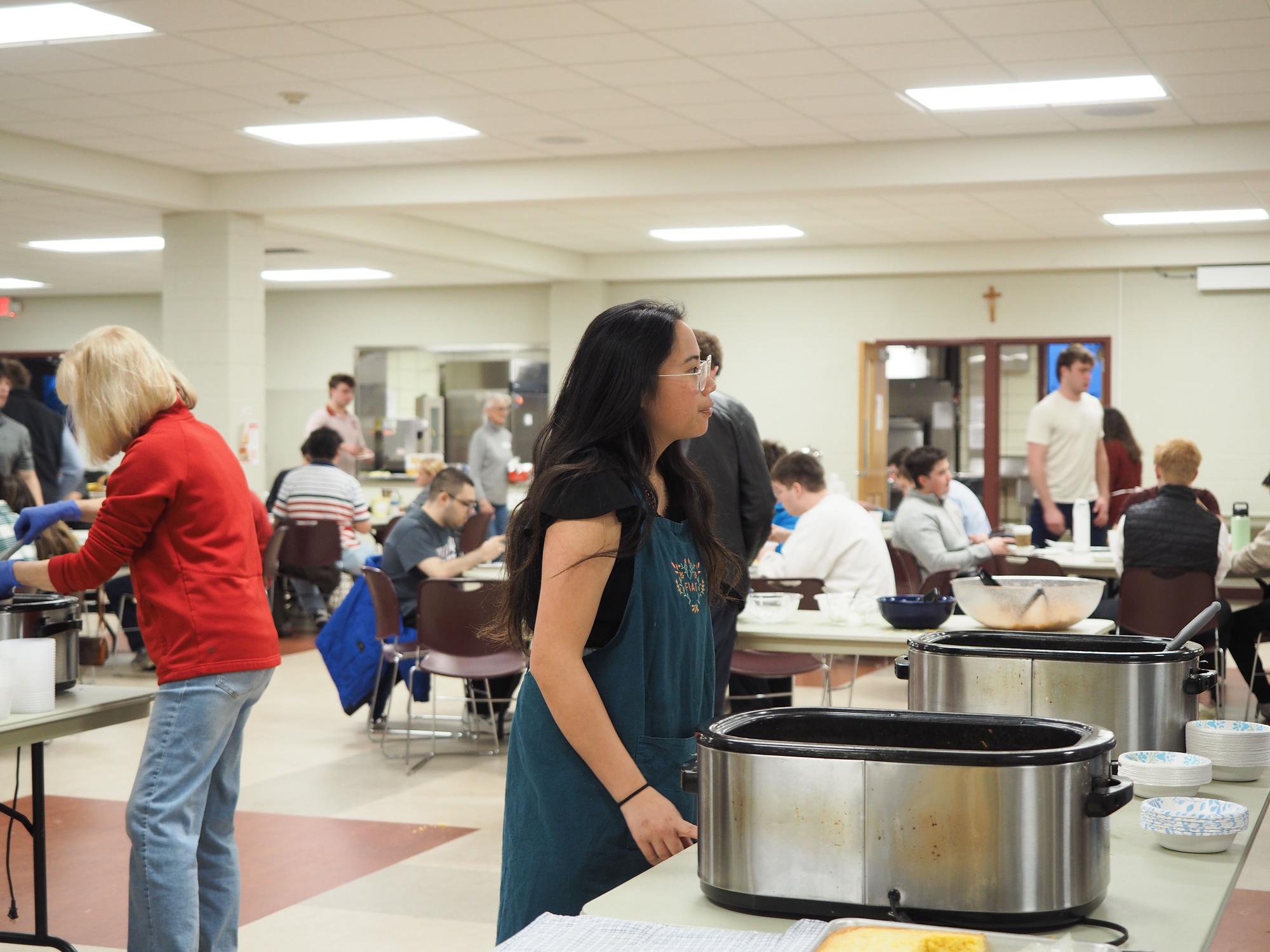
Many campus ministry groups value these dual horizontal and vertical connections. Faith-based organizations are designed to help members flourish spiritually. However, in a college environment, finding camaraderie through commonality is also paramount. Nearly two-thirds of American college students suffer from feelings of loneliness, particularly in their first year.
But the United States’ “loneliness epidemic” encompasses much more than college freshmen’s homesickness.
Because of the prolonged isolation of the COVID-19 pandemic, many teenagers and young adults missed out on key years of socialization. Forty-five percent of parents responding to a 2025 Gallup poll believed their children suffered impeded social development during the pandemic.
The world’s re-opening was far from a cure-all. According to a University of California, Santa Barbara study, over 60% of adolescents reported the strongest negative responses of feeling disengaged from society in 2022. Young people accustomed to being alone continued defaulting to aloneness and associating social situations with anxiety, even after the crisis passed.
Chi Alpha seeks to address these challenges by emphasizing community-based spiritual growth. The organization sorts its members into Core Groups — small Bible studies that double as social networks — based on identifying factors like gender, class standing, major and hobbies.
“There’s a lot of intentionality with community and discipleship,” said Rachel Dwaram, a senior in Chi Alpha. “We also do two-on-one meetings throughout the week for more intentional discipleship time.”
An intimate, all-encompassing approach to spiritual growth is also a feature of IU’s Christian Student Fellowship. The group was founded in the 1960s as an outgrowth of a weekly Bible study on campus. Later, CSF was incorporated into the Association of College Ministries, a diverse collective of student Christian organizations across the country.
CSF has operated out of an approximately 28,000-square-foot house on David Baker Avenue — which connects to IU’s so-called “frat row” — since 2002. As a result, the group is distinctive among university ministries in offering its members housing. Residents of CSF’s house are surrounded by those who share their faith to help them build intentionality with religious practice.
“We’re not just a Christian dorm; we are a campus ministry that happens to have housing for its members,” CSF Campus Minister Stephanie Michael said. “If you’re living there, you are involved in the campus ministry.”
Like other campus ministry groups, CSF aims to foster both spiritual and social connection for its members. Shared values among house residents may help combat the isolation and angst that can accompany college life, even when they are quibbling about trash removal or cleaning dishes.
“The house is a bunch of people from all over that can come together and find commonality in worshipping Jesus,” said Nick Conrad, CSF associate campus minister. “It’s not always Bible trivia and constant worship songs, but it’s very cool that that’s a uniting factor. It’s a unique space to bond at a very human level.”
•••
Balancing college life with spiritual exploration is a tall order. The demand may be magnified at IU Bloomington, often deemed one of the country’s “top party schools.”
“On this kind of campus with this kind of culture, it can be tempting to try and do things just because you want to fit in or just because you don’t want to miss out on what someone else is doing,” Dwaram, who first formed plans to join IU’s Chi Alpha chapter as a high school senior, said. “That’s a big thing that I think, as a Christian, we’re working against.”
Moving against this social tide sometimes proves alienating for IU’s religious students.
“Freshman year, your first week on campus, everybody’s trying to find wherever the parties are, which night, which dorm,” McDonald said. “There were definitely activities going on that don’t align with my moral beliefs. There can be a feeling of exclusion there.”
Although Generation Z drinks alcohol less than previous generations, party culture remains prevalent among college students — 9 million U.S. college students participate in Greek life today. The pressure to participate is often self-imposed. After all, students are likelier to engage in high-risk drinking when they perceive others to be doing the same — even if these perceptions are inaccurate, or students encounter no explicit encouragement to follow along.
IU Bloomington’s legacy of being a “party school” may be, in turn, a self-fulfilling prophecy.
Some Christian Hoosiers have taken up the cause of rewriting this narrative. Dwaram said Chi Alpha members stand around campus in the days surrounding the Little 500 — often billed as “The World's Greatest College Weekend” — to socialize with and provide water bottles to partying students. She said Chi Alpha also offers a free bus service during the Little 500 weekend to ensure intoxicated students can access a safe ride home.
“It’s kind of a way that we’ve been able to show people the love of Christ without necessarily screaming about it,” Dwaram said. “For a lot of people, partying isn’t even about wanting to ‘live your 20s;’ it might be that there’s a hole you’re trying to fill. Being a light for those people is definitely something that we try to emphasize.”
Harm reduction surrounding IU’s party culture is also a priority for CSF. Because the organization is housed so close to much of IU’s Greek life, CSF is uniquely exposed to the epicenter of campus’s party scene.
To CSF leadership, this exposure is an opportunity for engagement. Conrad said CSF members took it upon themselves to go out on this past Halloween night to pass out water bottles and food to students bouncing around parties. He said acts as simple as sharing their intramural basketball court have helped CSF forge friendly ties with neighboring Greek life organizations.
“We want to be better, open, more caring neighbors,” Conrad said. “We don’t want to seem like this Christian bubble, where people wonder, ‘what’s going on in there?’”
•••
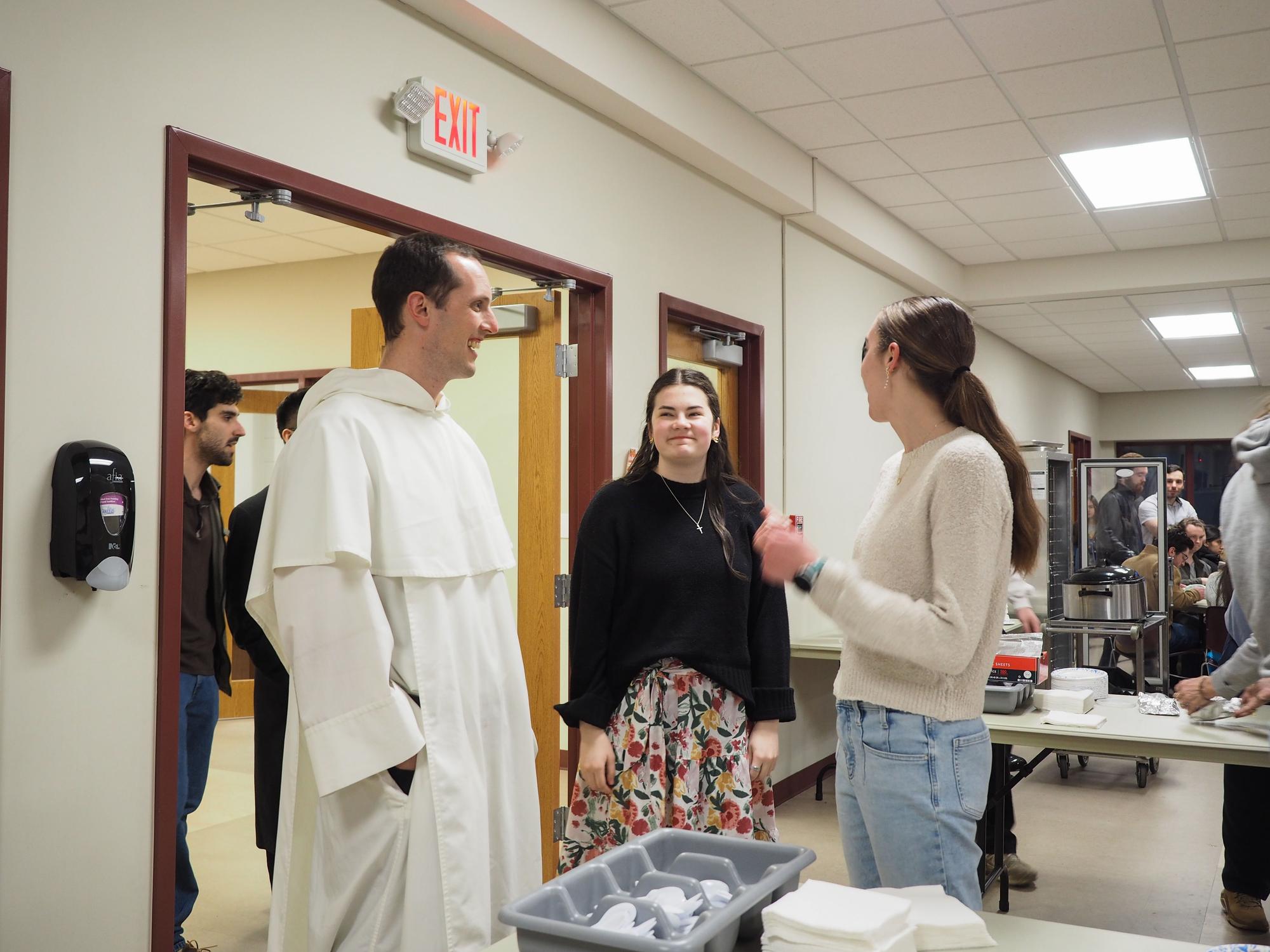
Spiritual engagement beyond the so-called “Christian bubble” is a core principle of evangelical Christianity. Brown, who has taught about American Christianity at IU since 2006, said evangelicals emphasize the primacy of the Bible while adapting to and existing within a broader culture.
“I think of evangelicalism as trying to balance purity from corruption with presence in the world,” Brown said.
Evangelicalism is thus a theologically broad and adaptable concept. Perhaps it is this adaptability that has led almost one in four U.S. adults to identify as evangelical Protestants and allowed the movement to spread like wildfire across the Global South. And perhaps it is the notion of a diverse, experiential and self-defined faith that is drawing young people back to spirituality.
At IU, many students are flocking to religion’s combination of spiritual calling and social enrichment. Brown has observed this trend in the demographics of students enrolled in her classes about American evangelicalism. She said several years ago, she tended to teach more “ex-vangelicals”: individuals who grew up in, but later abandoned, evangelical churches.
Today, by contrast, Brown increasingly teaches young adults either seeking spiritual life for the first time or returning to Christianity after a spell of religious disillusionment. One of Brown’s former graduate students, a vocal atheist during her time at IU, recently contacted Brown to share she had been baptized.
Other sectors of campus are noticing a change, too. In an email to the Indiana Daily Student, St. Paul leadership reported growth from approximately 345 Bible study attendees during the 2023-24 school year to approximately 525 during the current school year. Additionally, fewer than 35 students and St. Paul resident parishioners initiated their Catholic conversion through the ministry during the 2024-25 school year. This year, that number is closer to 160.
“Masses have been more and more full each year I’ve been here, but this year there are people standing against the walls every week because there aren’t enough seats,” McDonald, captain of the St. Paul Godspeed Cycling team, said. “All the events are breaking records — whether it’s the number of people coming to Bible studies, leading Bible studies, attending retreats or attending mass, we see this increase.”
So, is IU seeing a full-blown Christian revival? Maybe, maybe not.
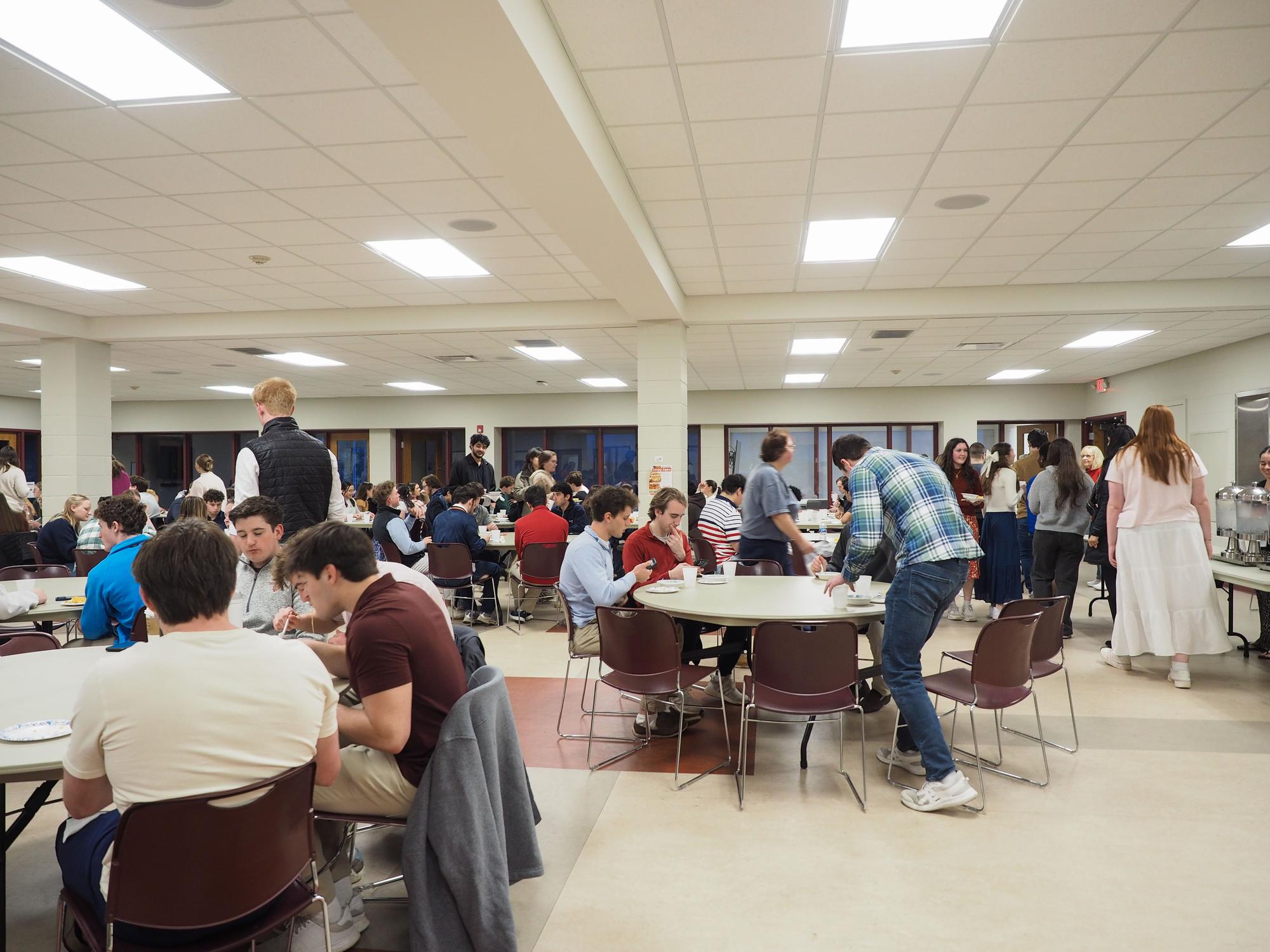
Michael and Conrad have observed more modest membership growth at CSF. Still, they said they have noticed an increase in students turning to CSF in search of community, even when those students aren’t necessarily avowed Christians.
It could be this allure of community that’s attracting more students to Christianity. Or maybe the shift can be explained as young people doing what they do best: rebelling. As 20-somethings, millennials turned away from religion en masse to rebut Generation X’s relative fidelity to faith. Now, Generation Z might be counterculturally bucking millennials’ secularity.
“There are always pendulum swings,” Brown said. “Young people want to have their own identity, and if you tell them ‘you’re this,’ it can prompt thinking through ‘well, who am I, who do I want to be and what do I want my life to look like?’”
Such reflection, in a conflict-ridden and sometimes seemingly directionless modern age, can point students in religion’s direction.
“I think people want to find answers, or they want to find purpose,” Dwaram said. “We’re always going to feel like we’re not enough, or we need to do something more to prove ourselves. Something appealing about Christianity is that you don’t actually have to do something more, you’ve already been forgiven.”
McDonald also views religion as a clarifying response to life’s murky anxieties.
“There’s so much that makes life feel out of control and chaotic,” McDonald said. “(Faith) reveals this truth about us, that we’re made for something more than all this, that this isn’t all that’s out there, that there’s something substantive within all of this.”
For their part, the Salt Company’s members seem eager to uncover this substance. The room’s lights return at the conclusion of two worship songs. After the band clears the stage, staffers quickly set up for the night’s sermon. An undercurrent of chatter breaks out as students take their seats, reach for their Bibles and journals for note-taking and catch up with the friends around them.
The end of the week is cause for celebration for many Hoosiers. These students have chosen to center their festivity around their community and shared belief.
At IU and beyond, young people are pursuing refuge from an uncertain world — and finding it through trust in what they can’t see.
Like what you're reading?
Support independent, award-winning student journalism.
Donate.