The grass was speckled with dew the morning Jenny Rogers swerved off the side of Truesdel Road and lost control of her car.
The slippery conditions caused her car to slide, and as she tried to regain control, she saw another driver hurtling down the Owen County street. She remembered seeing a child sitting in the passenger seat.
Instead of hitting the other car, the 27-year-old veered off the road and struck a tree head-on at 60 to 70 miles per hour. The impact of the crash fractured her spine and ruptured her spleen.
A helicopter airlifted her to a hospital in Indianapolis, where she spent weeks recovering. Doctors prescribed opiates to help Jenny manage her pain, which she took for 19 months starting in 2013.
But what started as pain management spiraled out of control.
After stopping the medication cold turkey, Jenny became addicted to IV heroin, another opioid. She spent years in and out of jail in Owen and Monroe counties: 11 months, 13 months, nine months.
She lost her house and her kids. She moved in with her grandfather, and then with a man she met in a recovery program. They both relapsed and ended up living out of her Dodge Avenger. It was a vicious cycle she spun through, one living situation to the next, then to jail.
Addiction ate her alive. Her blonde hair thinned, she lost weight and her skin became riddled with staph infections and abrasions. Jenny wore makeup to cover her changing appearance.
Finally, she hit rock bottom. And she knew she had to dig herself out.
•••
Jenny is one of millions in the country who have struggled with opioid addiction and one of thousands who has walked through the doors of New Leaf, New Life, a nonprofit that works to support people who are or were incarcerated to transition out of jail, oftentimes those who also are recovering from addiction.
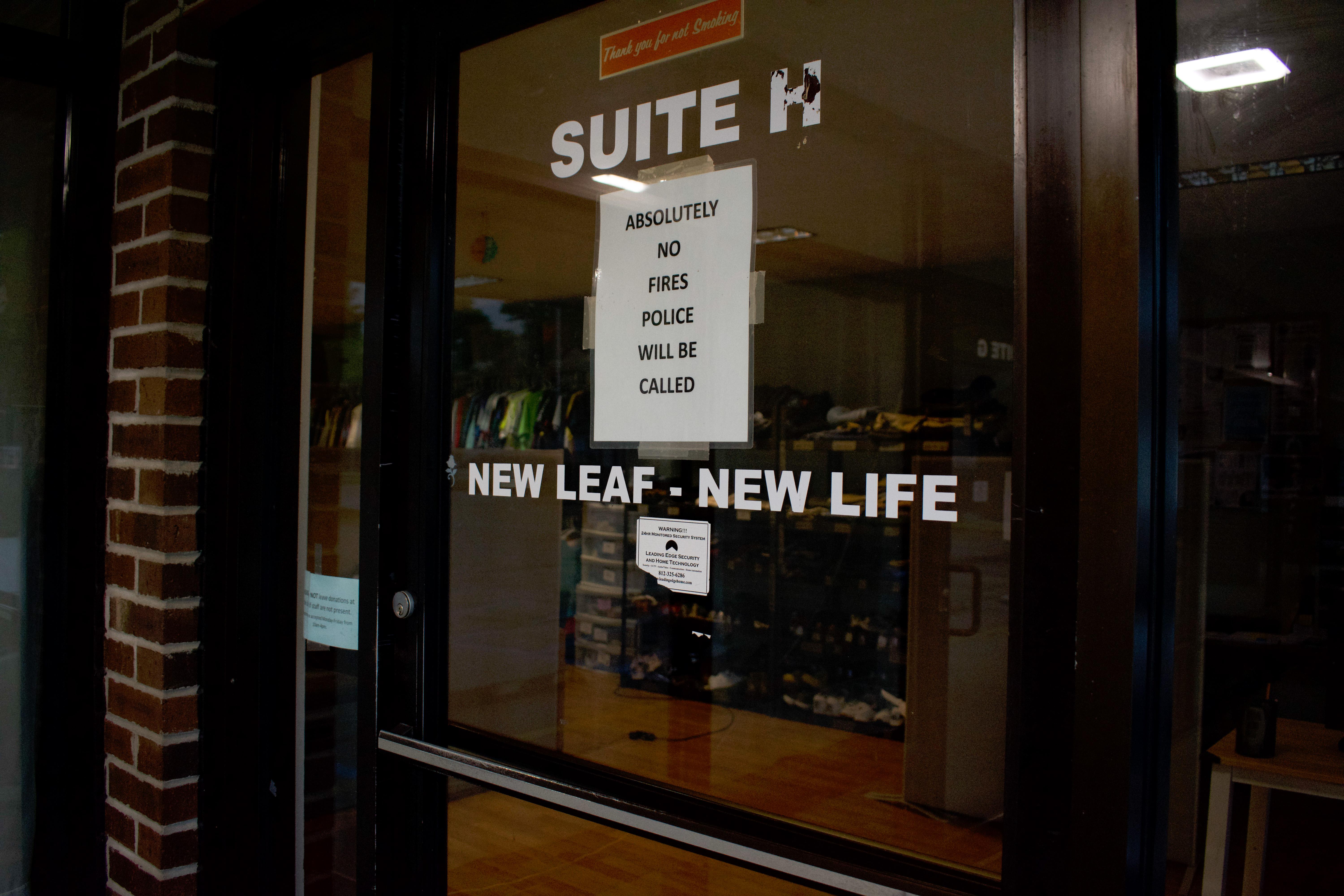
Natalia Nelson | IDS
The New Leaf, New Life building is pictured May 5, 2026, in Bloomington. NLNL has helped people get identification, bus tickets, nonslip shoes for jobs, referrals to treatment centers and sober living.The rate of opioid prescription in the United States peaked in 2012, with medical professionals writing more than 255 million prescriptions. During the first phase of the opioid epidemic in the mid-1990s, prescription-opioid deaths steadily increased.
Opioid users were able to collect many prescriptions and sell excess pills due to patient-privacy laws and poor coordination between states. But in 2016, state and federal agencies began to restrict the drugs’ availability.
At the same time, the amount of heroin in the country increased and its price declined rapidly.
In 2023, opioid overdose deaths were nearly 10 times as high as in 1999. But from 2022 to 2023, the rate dropped by 4%. Local communities, including in southern Indiana, pushed back against the epidemic and shifted to peer support-based programs — meaning people who have successfully recovered from addiction work to help those still working through recovery.
For Jenny her mentors’ lived experience made her recovery pathway stick.
•••
Jenny knew the dangers of addiction. She was raised on it. Her father and stepmother were in active addiction her whole life. Her father began with alcoholism, then opiates and now is addicted to amphetamines, Jenny said.
“My grandmother always was very mindful in telling me, ‘Jenny, listen, you know, it’s in your genes, it runs in your family, like don’t do drugs, don’t drink,” Jenny said. “Because there’s a good chance you’re going to end up like this.’”
And for many years she didn’t. She knew what addiction did.
But after 19 months of using opiates to manage her pain following the accident, Jenny’s doctor told her she didn’t meet the criteria for the prescription anymore and cut her off, she said. In the days that followed, she became sick and couldn’t get out of bed. It felt like the worst flu she had ever had.
She told one of her family members how she felt, and they offered her Roxicodone, another opioid. It made Jenny feel better. It made the pain subside. She continued getting pills from a family member in the months that followed.
“I couldn’t function in life without them,” Jenny said.
Eventually, Jenny came across someone who offered her something cheaper, something that solved her problems, that filled a void in her life: heroin.
She had never been so hopeless and desperate in her entire life. The beginning of addiction can feel like the best feeling in the world, she said. But once she became dependent on heroin, that feeling shifted.
“You’re like in that state of wanting to die, like wishing you would die, especially when you had it,” Jenny said, “I don’t even know a word for the mental state that I’m in.”
So she hid. She isolated herself, out of shame and guilt. She didn’t trust anyone.
She didn’t want to ever be seen.
•••
Jenny was arrested for the last time in January 2024 on child neglect, burglary and drug charges. In the years before, she found herself with a list of other charges, including possession, theft, check fraud, burglary, child support warrants and driving on a suspended license.
Right before she found herself in handcuffs, she crossed a boundary she promised herself she never would: She used while taking care of her children.
The day of her arrest, she dropped her daughter off at school and was waiting at her home until it was time to take her son. Then, she overdosed.
Her son, 11 at the time, called the police.
“I had no self-worth, no self-value, no self-love, no self-respect, all the things that had gone out the windows, morals, values, ethics, principles, everything I lost,” Jenny said. “And I was just at my bottom.”
Jenny was in the Monroe County Jail for 77 days. That’s where she met Claire Steffey. At the time, Claire was an intern with NLNL.
“She was like the freaking sunshine,” Jenny said. “I mean, jail’s not a great place to be. But like when she came in there, it was amazing.”
Each week, Claire brought the women coloring pages, crosswords, books and informational packets for different treatment options. Claire once brought Jenny a pair of red glasses with square frames. Jenny still wears them.
“I’d had my contacts in forever, because I just didn’t care about myself,” Jenny said.
Claire and Jenny formed a relationship, one strong enough to carry over once Jenny was released March 17, 2024. Claire brought Jenny an application for sober living at Amethyst House, a nonprofit residential and outpatient agency for people with drug or alcohol addictions.

Natalia Nelson | IDS
Clothing sits on racks May 5, 2026, inside the New Leaf, New Life building in Bloomington. The organization was created to be zero-barrier, zero-cost.Heather Bland, NLNL executive director, said it’s important for the group to engage with people before they leave jail so they can get excited about a different life.
After being released, NLNL helps people get identification, bus tickets, nonslip shoes for jobs, referrals to treatment centers and sober living, hygiene packs, jobs, rent support and connection. The organization is zero-barrier, zero-cost and served nearly 3,500 people in 2025.
“We want to encourage people to have the control of their own life,” Heather said. “We’re not giving something to someone to allow them to stay in the same place. We are giving and creating opportunities for them to take steps forward.”
•••
About a month and a half later, halfway through Jenny’s 90-day sober living program, one of her drug screens came back positive at Amethyst House. She hadn’t been sentenced yet and was facing 15 years in prison for her original charges: neglect of a dependent, possession of a narcotic drug, possession of a controlled substance, possession of paraphernalia and a level four felony burglary charge.
She almost ran, standing outside with scissors in her hand, about to cut off her house arrest bracelet.
Jenny said she hadn’t used and that the test was a false positive. It was terrible being accused of something she didn’t do, of using when she was trying so hard to recover.
Her case manager and therapist were there with her, trying to coach her through the situation. They told her to call her probation officer.
She felt discouraged, terrified that they wouldn’t believe her. She struggled to trust that it was going to be okay. Ultimately, she made the hard decision, calling her probation officer and telling him the truth: her drug test came back positive.
“I really think it was God telling me, ‘Listen Jenny, you’re going to have to learn to trust that you don’t have to control the outcome of things,’” she said.
Instead of 15 years in prison, she ended up in a seven-day intervention program at Amethyst House.
•••
Jenny made it through sober living but decided not to move on to independent living yet. It was the first time she made a decision for her recovery rather than for herself.
Instead of moving right to independent living, Misty James, assistant director at NLNL and Jenny’s case manager, referred Jenny to Courage to Change, a 12-step program and living environment designed for residents trying to establish or maintain sobriety.
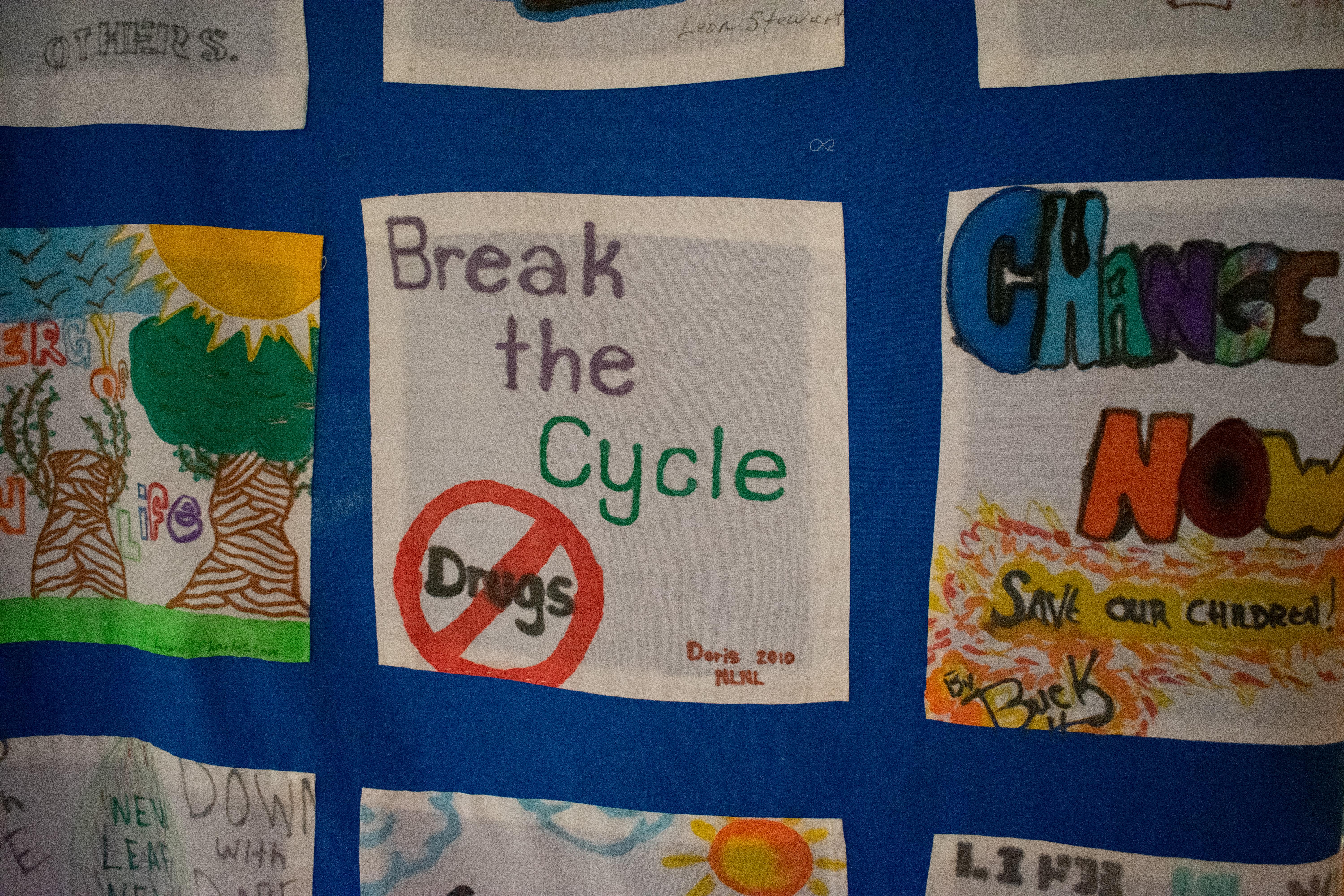
Natalia Nelson | IDS
A square reading “Break the Cycle” is sewn into a blanket full of quilt squares created by incarcerated artists May 5, 2026, at New Leaf, New Life in Bloomington. After a year in recovery, Jenny moved into independent living but sees herself continuing with the community in NLNL forever.“It’s really hard to be in recovery,” Jenny said. “Anybody who recovers, to me, is a miracle, but it takes a different type of willingness and determination to get clean in the town that you got high in.”
Misty helped guide Jenny from the start of her recovery. She showed her how to live, Jenny said. Even now, she and Misty talk on a daily basis.
In Courage to Change, Jenny saved money and built her confidence. Jenny opened herself up to people. She was honest with herself. She began to trust them in a way that wasn’t possible before.
She tried recovering before. But she didn’t understand how important it was to let herself be vulnerable.
“I was always just like nine toes in, or I would come in and was still wearing this mask,” Jenny said. “I would gain a little bit of clean time and gain things like the job, the car, the independent living, and then it would fall all the way apart.”
Recovering requires you to make connections with other people; you can’t do it alone, Jenny said.
With Claire and Misty, Jenny made a plan to stop her from going back to old ways.
NLNL doesn’t tell people what they need to do, Heather said. The organization works with them, asks them what they want to do, and figures out how best to support them in reaching those goals.
After a year in recovery, Jenny moved into her own apartment and now pays rent without assistance. But she still sees herself continuing with the community in NLNL forever. The people she’s met and formed close relationships with keep her accountable. They know her personality and notice when she’s isolating herself. They’ll come knocking on her door if something is awry.
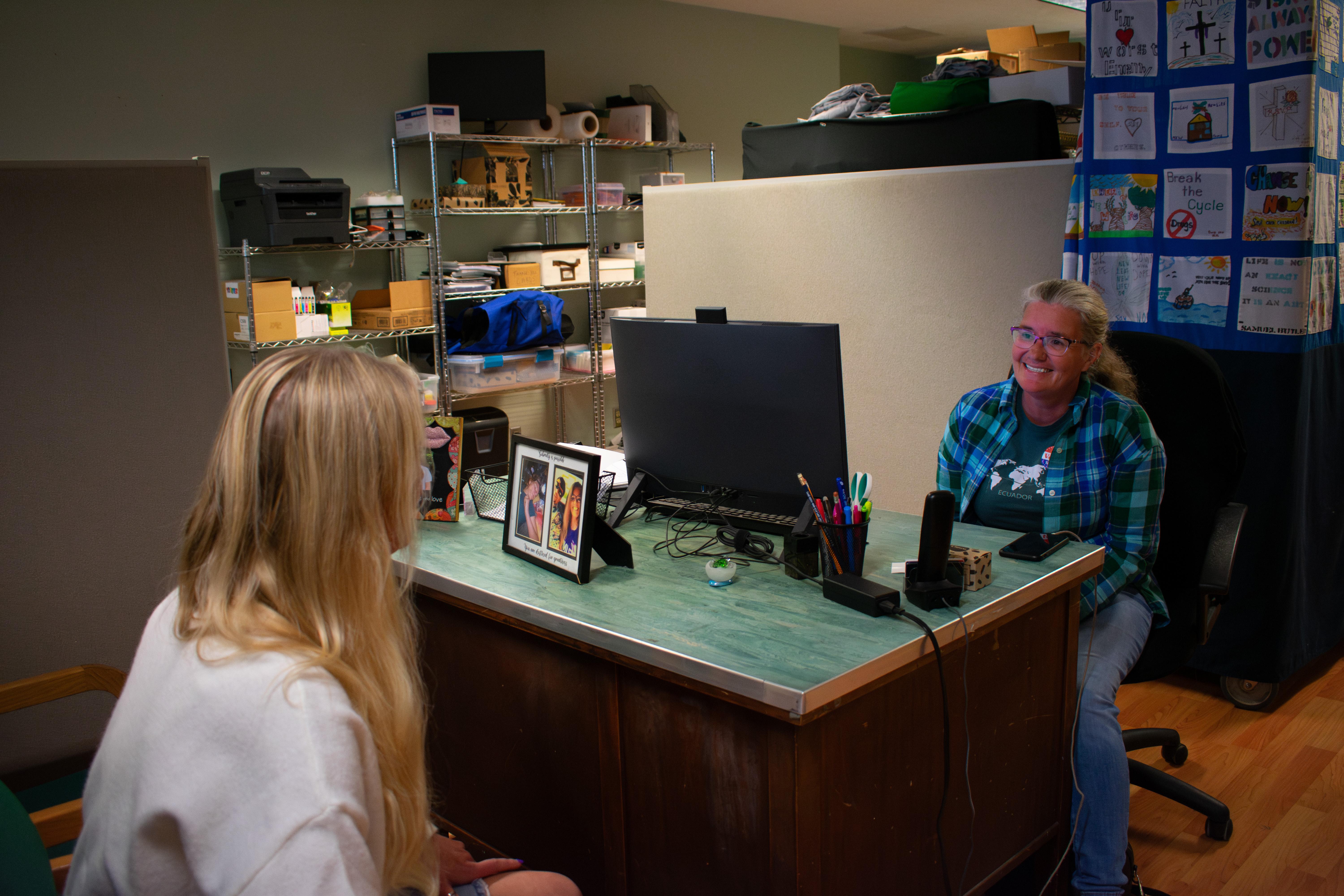
Natalia Nelson | IDS
Jenny Rogers (left) and Misty James (right), assistant director at New Leaf, New Life and Jenny‘s case manager, chat May 5, 2026, at the NLNL building in Bloomington. Misty had experience with incarceration and addiction, like most of the NLNL staff.“I think, when you come to the realization that you don’t know how to live and your way of living keeps getting you high and incarcerated, you’re willing,” Jenny said. “All these people that have stayed clean that I know in this program have done it because they’ve been held accountable to somebody.”
Lived experience significantly impacts how NLNL operates — through empowerment and encouraging people to control their lives, Heather said. People going through recovery can see how people have overcome barriers, she said.
People are misinformed about incarcerated people, and label them as “terrible people who are going to do terrible things,” Misty said.
“We are more than what we have done,” Heather said. “If you look at some of us on paper, it’s very different than who we are in person. And if we are held to what a rap sheet says about us, we’re never going to make it.”
When she looks at people who have succeeded, who have gotten clean, who have what she wants, Jenny notices a sense of peace about them. They’re genuinely happy, she sees them laughing and joyful.
That’s her goal. To feel peace and serenity.
•••
Before her addiction, she was a hairstylist. Jenny, now 40, sometimes does hair for people who are in the first 28 days of recovery at Boca Recovery Center. She also works as a café manager at Rockets Convenience Plus in Bloomington. People come in all the time and ask how she got clean.
“And I’m like, listen, ‘You too can have recovery and work at a gas station,’” she said.
It’s been humbling, Jenny said, to know she could make decent money as a full-time hairstylist. But she said she needs to experience humility, she said.
“If that’s the difference between me staying clean and not, fine,” she said. “That’s okay. I’ll work at the gas station the rest of my life.”
She still stops by NLNL and on Sept. 2, 2026, Jenny is expected to graduate from problem solving court, which is focused on a specific offense or struggle, positive outcomes and criminal reoffending reduction. After, all her charges will be expunged from her record.
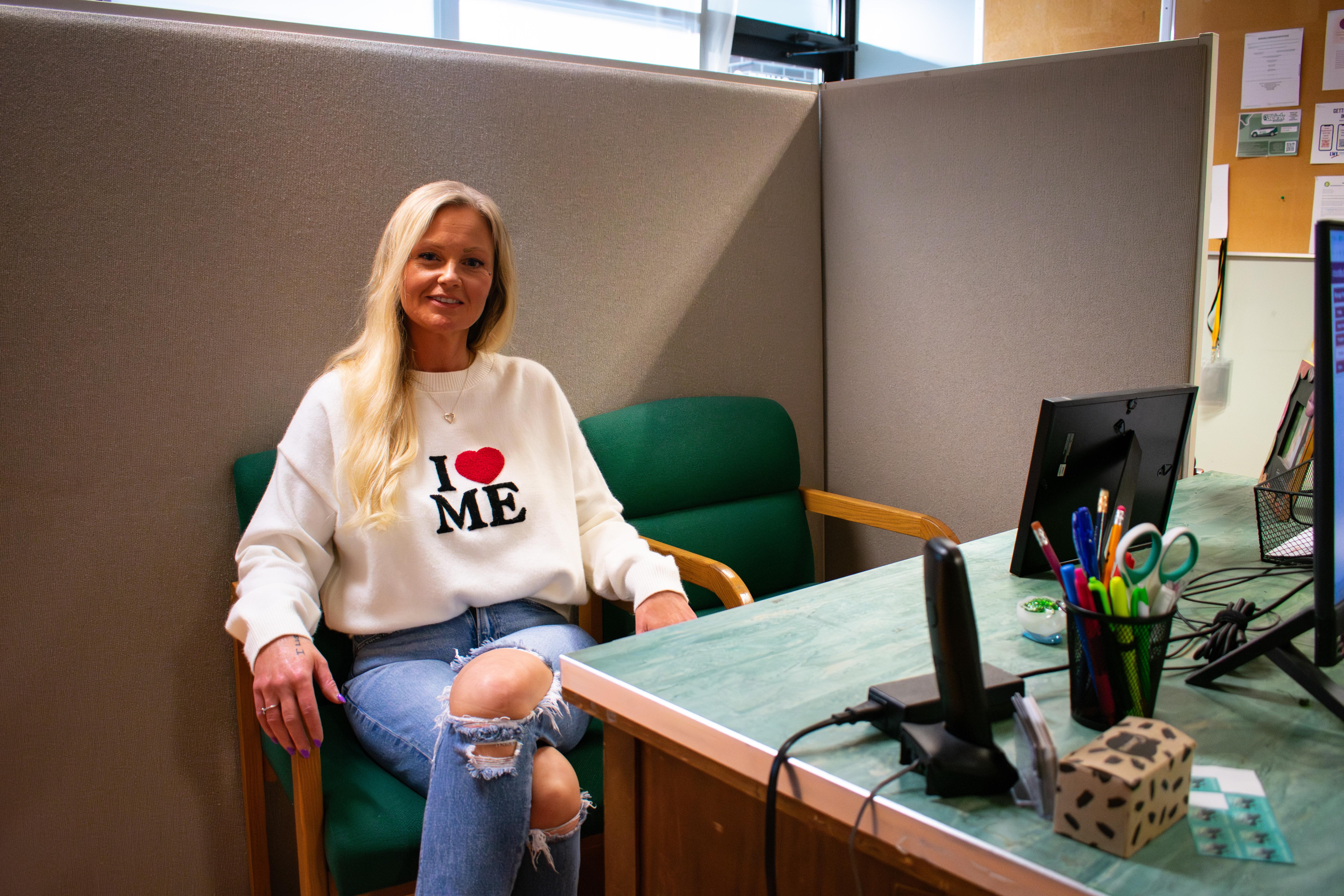
Natalia Nelson | IDS
Jenny Rogers smiles for a portrait May 5, 2026, at the New Leaf, New Life building in Bloomington. Before her addiction, Jenny was a hairstylist.Although they were put in the care of their father, Jenny’s relationships with her son and daughter, now 14 and 18, have grown over the years. In her two years of sobriety, she’s been a consistent presence in their lives. After years of false hope and promises, they’ve opened up to her.
“They see the difference in me, that they haven’t seen before in recovery,” Jenny said.
She doesn’t see them as often as she’d like to, but they FaceTime. She watches her son play football and enjoys helping her daughter plan her baby shower. She’s excited to show up as a grandparent after missing time with her kids.
Jenny goes shopping with her daughter at T.J. Maxx and the mall and thrifts with her son. They love to shoe shop.
She feels peace when she’s shopping, when she knows her finances are in order. She feels peace when she’s alone, because she can be now. She feels peace when her relationships are healthy, when she’s showing up as the friend she wants people to be for her.
Recovery is worth it, Jenny said. It’s worth it to be in the room with people recovering. To feel the connection, the love, the things you don’t have in active addiction.
“Give it one year. If your life doesn’t significantly get better in that one year, then go back out and use, that’s what I was told,” Jenny said. “And I was like, ‘Okay, fine. I’ll give it one year.’ and my life has completely changed. You don’t have to live like that.”
Jenny feels her emotions again. She wants to go on vacation. She wants to make a difference in someone’s life. She has a plan. She has goals.
She’s starting to reach them.
Like what you're reading?
Support independent, award-winning student journalism.
Donate.