The following reporters contributed to this investigation: Alayna Wilkening, Andrew Miller, Chloe Oden, Deshna Venkatachalam, Ella Curlin, Emerson Elledge, Grace Fridy, Jack Forrest, Jonathan Frey, Mia Hilkowitz, Mia Lehmkuhl, Natalia Nelson
Adam’s daughter was involuntarily committed to Bloomington Meadows Hospital when she was 15 after telling friends she planned to commit suicide.
Adam said no one at Meadows told him how long his daughter would have to stay in the facility — he assumed she’d only be there for around a day. But it was a holiday weekend, he said, which meant there weren’t any doctors present to evaluate her. She spent several days in the facility before a doctor assessed her.
Adam, who requested to omit his last name due to privacy concerns, later called his daughter on Zoom. In the background, he said he witnessed patients getting into a fistfight.
“It was right behind her, like on this phone looking at us, and they were banging on the walls,” he said.
His daughter had never witnessed a fight before, Adam said. She started crying. Staff put one of the patients in a separate room, he said. He could still hear banging on the walls.
“It was horrible,” Adam said. “And I was like, ‘Does she has to be there around all that?’”
The next time his daughter called, she was crying again. She told Adam some of the younger workers at the facility told her and two other patients their room was haunted.
“(They) started telling them, you know, like, ‘if you hear things or see things in this room at night, you know, don't be alarmed because this room's haunted,’” Adam said. “‘There's been a lot of people kill theirself in this, in this hospital room.’”
That was Adam’s final straw. He left work and told his boss he was either coming back with his daughter or not at all. He reached the facility and brought her home.
Investigation Findings
Bloomington Meadows Hospital has routinely struggled to protect its patients’ safety, an Indiana Daily Student investigation found. The mental health facility has a documented history of alleged physical and sexual assaults impacting patients and staff. Police records, federal inspection records and interviews with patients show problems have persisted over many years. Yet there has been limited press coverage of the facility, which is one of the largest acute mental health treatment centers in the region, where patients are often involuntarily committed.
Patients and a former staff member told the IDS that persistent staffing shortages meant the facility was often unable to effectively address fights and assaults. Oftentimes, a former worker said, incidents where patients were assaulted or assaulted other patients weren’t reported to police. That’s not uncommon in mental health care facilities, he said.
“The system discourages getting the police involved at all costs,” he said.
The challenges Meadows faces to maintain patient safety are not unique to the Bloomington facility and are no less severe in other for-profit acute mental health facilities across the country. In 2022, two U.S. Senate committees launched an investigation into four major health care providers, including Meadows’ parent company Universal Health Services, over allegations of abuse and neglect of children at residential treatment facilities (RTFs) across the country.
Meadows is not explicitly mentioned in the final report, but the investigation found a wide list of common deficiencies in facilities, including that children “suffer routine harm inside RTFs” and facilities’ staffing failures “have led to tragic incidents, including child fatalities… and repeated exposure to risk.” The report also found “Horrific instances of sexual abuse persist unremediated inside RTFs” and that “The use of restraint and seclusion in RTFs allows for unchecked abuse.”
Chloe LaVelle | IDS
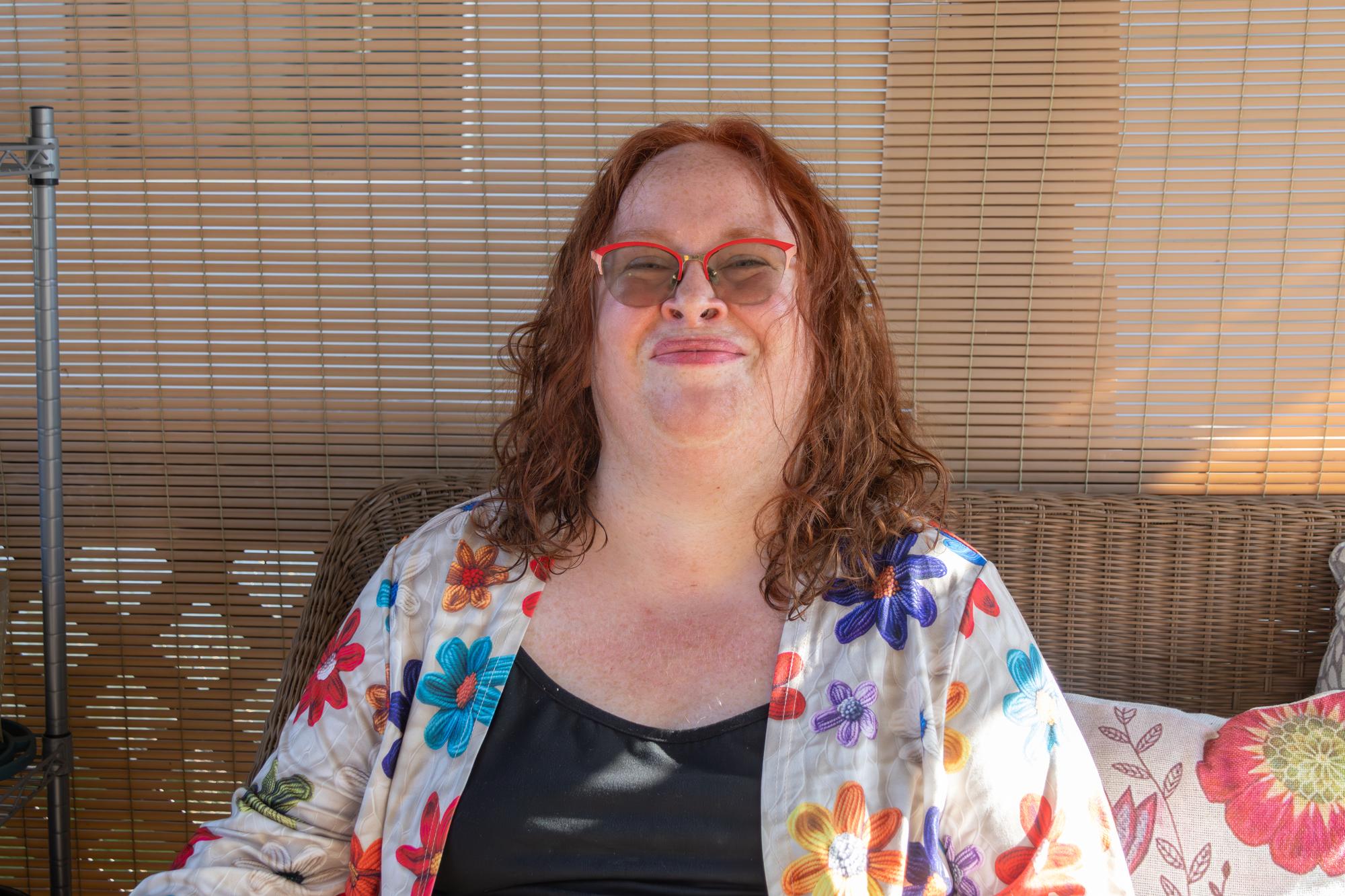
Kara Felton, now 40, was a patient at Meadows for five days in October 2022. They said they overheard staff conversations while wandering the halls and came to believe employees were overworked. They listened to one conversation about a fight where a staff member was allegedly injured in the teenage wing.
Assaults are not an uncommon occurrence at mental health facilities across the United States, but one former staff member said the problems were particularly acute at Meadows.
“I’d say more — definitely more — than other places,” the former employee said, “but it’s pretty much par for the course.”
Felton stressed her appreciation for the hospital's staff, saying they “always treated us like we were people,” and “didn’t forget that we were exactly like them, but going through something.” Felton said Meadows helped save her life, but she acknowledged it had a “dark side.” One reason, they said, was that staff were “stretched thin and doing the best with what they can.”
A representative for Universal Health Services, the healthcare management company that owns Meadows, declined an interview request with the IDS for this story. Meadows and UHS did not respond to other requests for comment from the IDS, including a detailed three-page list of questions.
However, Tina Frayer, investigations coordinator at Indiana Disability Rights, a state protection and advocacy system, said many of the issues at Meadows were consistent with other acute hospitals across the state, though she said complaints about these hospitals are “few and far between.” Frayer said she could not disclose details or if her agency had investigated the Bloomington facility or what investigations found, but spoke more broadly.
“There may be one facility that does a really good job with one or the other, or both, and others that aren’t quite as good or maybe really lack some of those components,” Frayer said. “But I wouldn’t say that I can consistently say this is a bad hospital (or) this is not a bad hospital, because it kind of depends on the people who are involved and cooperation from the person, the family. There’s a lot of things that play into it.”
Records and interviews establish a pattern of assaults
From 2021 to January 2026, the Bloomington Police Department was called to Meadows more than 450 times, according to records obtained by the IDS. That means one call about every four days for the 78-bed facility. Police were often called to assist with issues like welfare checks and runaways.
But assault calls were common as well. Police responded to calls alleging that patients physically assaulted other patients or hospital staff, resulting in bodily harm, at least 55 times over the past five years, according to an IDS analysis of over 120 BPD police reports originating from this timeframe.
The true number of assaults, one patient told the IDS, is likely much higher. A former worker at Meadows agreed with that assessment. He described violent incidents as happening daily to weekly.
Many of the reported assaults involved patients under the age of 18. At least 29 police visits, documented in police reports, involved allegations of juvenile patients assaulting other patients or staff, or being assaulted themselves. In one of the most troubling cases, police responded to a call in May 2021 reporting that an 8-year-old boy suffered a brain bleed after another juvenile picked him up and threw him on the ground.
The IDS has not obtained police call data for other residential treatment facilities in Indiana to determine how this call volume compares to similar institutions. The Senate committees’ report and news reporting on other UHS facilities show it's not uncommon for police to be called to acute care facilities.
One 21-year-old former patient, who requested to go by the pseudonym Erin, went to Meadows five times throughout her teens, seeking treatment for sexual trauma and mental illnesses. She said she saw about one physical altercation each day.
One patient, Erin said, punched her in the face because of “gossip” through the units. She said staff separated them, but didn’t take any further action.
Erin’s mother, who requested to go by the pseudonym Amy, said Meadows didn’t contact her about her daughter’s assault. She found out a few hours after, when Erin was able to call home. They both alleged Meadows never contacted police about the assault.
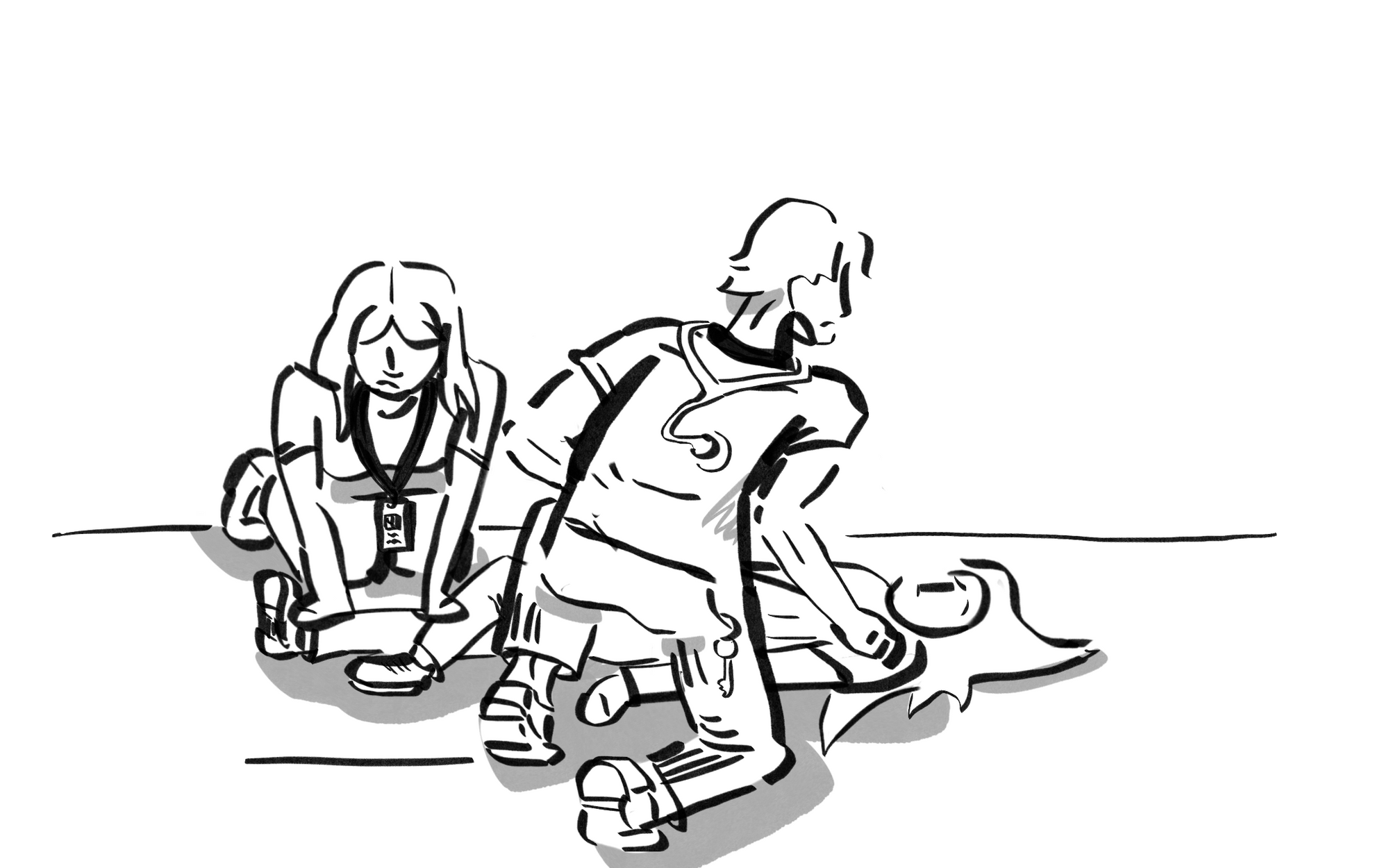
Amy alleged that Meadows staff told her Bloomington police didn’t have authority over the facility. She then called BPD, she said, which confirmed it had jurisdiction and said it would look into the situation. She said she never heard back, and as far as she knows, no official report was made. The IDS was unable to obtain a police record for this case, and BPD was unable to provide additional comment on the case.
When staff did intervene in fights, Erin said, they’d first try to physically hold down those involved until they stopped being aggressive or struggling. If a patient didn’t calm down, she said, staff would sedate them and send them to isolation in a quiet room — times ranged from 15 minutes to the rest of the day.
“It was terrifying to watch,” Erin said.
Meadows admitted patients with criminal backgrounds
The IDS investigation identified at least five cases between January 2023 and January 2026 where police responded to reports of assaults against other patients or staff by patients who had prior criminal or misdemeanor charges on their record.
In January 2023, police were called after a 36-year-old male patient allegedly sexually assaulted a 21-year-old female at the facility. Cross-referencing the police report with court records shows that man had prior convictions for arson and criminal trespass.
A 35-year-old female patient, with vehicle theft, criminal trespass and resisting arrest convictions, was admitted in January 2022. There, she allegedly assaulted two other women, punching one in the head several times and scratching the other’s legs and drawing blood.
In February 2024, a 67-year-old male patient hit a 28-year-old female employee on the head repeatedly and choked her. The man had previously been charged with battery against a public safety official and intimidation with the intent to act.
In October 2023, a 28-year-old female patient spat in a female employee’s eye and spit on another person in the facility. The patient had a history of violent or erratic behavior outside of the facility and had been arrested and convicted several times for possession and use of methamphetamine and battery against public safety officials.
A 32-year-old male patient allegedly punched a 53-year-old patient in the face this January. The 32-year-old had previously been arrested for misdemeanor battery resulting in bodily harm.
Frayer said she doesn’t know specific policies or guidelines that prevent Meadows from admitting patients with previous criminal or misdemeanor charges. Still, she said it’s important to remember the purpose of hospitals like Meadows: to provide mental health treatment.
“(Hospitals) try to do a good job of, like, assessing if the person would fit in that location. Would they be safe? Would other people be safe with them there?” she said. “But when it comes right down to it, if the kid needs help, they’re probably going to take them, whether it’s a good fit or not, and try to do some things with the supervision to make sure nothing happens.”
Frayer said some patients, specifically juveniles, may move back and forth between juvenile detention centers and acute mental health facilities like Meadows.
“Kids in detention will come over, they’ll get into scuffles, they’ll have some sort of criminal activity, they’ll run away, they’ll do whatever, and then they’re back and forth,” she said. “So, the back and forth isn’t good for kids.”
Government investigations
The Centers for Medicare and Medicaid Services and the Indiana Department of Health oversee acute care providers’ compliance with federal regulations to determine if providers are meeting the necessary standards of care to participate in Medicare and Medicaid programs. These agencies conduct periodic, routine inspections, but they also conduct investigations when they receive complaints against a hospital. The IDS requested all public licensure surveys maintained by these agencies for Meadows from 2015 to February 2026.
The IDS received reports for 29 CMS inspections of Meadows from 2016 to 2024 through this public records request. Twenty-two of these inspections were in response to complaints received against the hospital, while the other seven were routine or validation inspections. In 19 of these 29, inspectors found deficiencies in patients safety and quality of care. The other 10 reports did not find any deficiencies and found Meadows in compliance with federal and state regulations.
One of the earliest and most troubling reports of a deficiency seriously putting patients at risk came in September 2018. After receiving a complaint against the hospital, government inspectors visited the hospital. Inspectors determined a Meadows patient sexually assaulted another patient. The agency reported in a federal inspection report that the facility failed document that it separated the perpetrator from the victim and other patients after the assault. Nor did Meadows have documentation that staff gave the victim a physical assessment after the assault, the report said, or increased its observation of the perpetrator.
The federal investigation report concluded that Meadows’ failure to protect the victim, as well as other failures the agency identified during the same inspection, merited a finding the agency calls “immediate jeopardy,” which means the hospital has placed the health and safety of patients at risk for serious harm. Facilities where regulators find immediate jeopardy must submit a plan to immediately address the risk and a future plan of correction. In a plan of correction Meadows filed shortly after the immediate jeopardy finding, the hospital said it revised its “Sexual Acting Out and Victimization Risk Policy” to require that staff notify physicians of any aggressive behavior from patients. The hospital assessed nursing and medical staff knowledge of the policy with a “competency test.”
The hospital was notified of the “immediate jeopardy” concern on Sept. 13, 2018. The designation was lifted 21 days later on Oct. 9, 2018. Inspectors have not applied this severe finding to Meadows since 2018.
However, an IDS review of BPD records over the past five years show that the problems documented in this 2018 report were not completely solved.
These reports from 2021 to January 2026 documented at least 18 reports of alleged sexual assault or rape at the facility. In 12 cases, the reported victims were minors. These alleged sexual assaults are in addition to the 55 reports of simple assaults the IDS identified in BPD records.
Most sexual assault or rape cases did not result in arrests documented in reports, an IDS review of police reports found. Police determined eight reports to be “inactive” due to a lack of further information on suspects or evidence. Seven were marked as “unfounded.”
The 2018 CMS investigation report also documented that nurses backed off from patient supervision during low staffing periods. Agency reviews of facility staffing sheets showed hospital units faced shortages of mental health technicians and registered nurses multiple times. It also noted patient violence — one who was punched, one placed in a chokehold and another who had an object thrown at them.
In the follow-up CMS report from October 2018, which noted the lifting of the “immediate jeopardy” finding, investigators still found the facility failed to create a safe setting for patients in a number of respects. For example, Meadows again failed to maintain or increase observation of patients who were physically or sexually aggressive toward others.
A Meadows administrator and clinical director, the report said, declined to answer federal investigators’ questions about policies and procedures for protecting patient safety and rights.
“The cumulative effect of these systematic problems resulted in the facility’s inability to ensure that Patient Rights were promoted,” the report reads.
Issues with patient safety were documented in subsequent federal inspection reports. For example, in December 2019, another CMS inspection found the facility lacked documentation of preventative guidelines after one patient intended to sneak into a male peer’s room after bedtime. There was also no documentation of the patients being separated after they engaged in sexual contact. One of the patients had a history of sexual abuse. Meadows again submitted a plan of correction to CMS.
Frayer said the IDR, a state protection and advocacy system, does not hear reports of sexual abuse in Indiana facilities often, but it does happen. She noted sexual assault cases in facilities can be difficult to investigate.
“We run into it a lot with our investigations. People move on. Time passes. You know, we’re talking about kids and adults on medications that can affect memory,” she said. “So it becomes very difficult at times to be able to come to a conclusion just because of time and medication, and I don’t think it’s a lack of cooperation or anything like that.”
Frayer also said prosecutors’ offices sometimes fail to follow through and make sure charges stick.
“I feel like kids feel like they’re discounted and they don’t feel like they’re listened to when that happens,” she said. “And again, not making excuses for why it doesn’t, but it is really hard because of the transient nature of acute placements, especially, you know, they’re in for seven days and then they’re out and gone. And I mean, they could be anywhere.”
Federal inspections issued since 2020 show fewer severe deficiencies related to patient safety than those back in 2018. More recently, the inspections have documented failures to ensure medical and nursing staff followed proper medical evaluation, monitoring, documentation and discharge procedures.
In June 2024, inspectors found the facility had failed to admit a patient they accepted for admission, who the facility had the capabilities of treating. During a follow-up that December, the most recent report obtained by the IDS, inspectors found Meadows was back in compliance with applicable regulations.
But despite the lack of documentation in more recent federal reports, police records — and statements from former patients — show that the patient safety problems have continued.
Through today.
Read the two-part investigation here:
Like what you're reading?
Support independent, award-winning student journalism.
Donate.